Why Sourdough Bread Stales So Fast (and How to Store It Right)
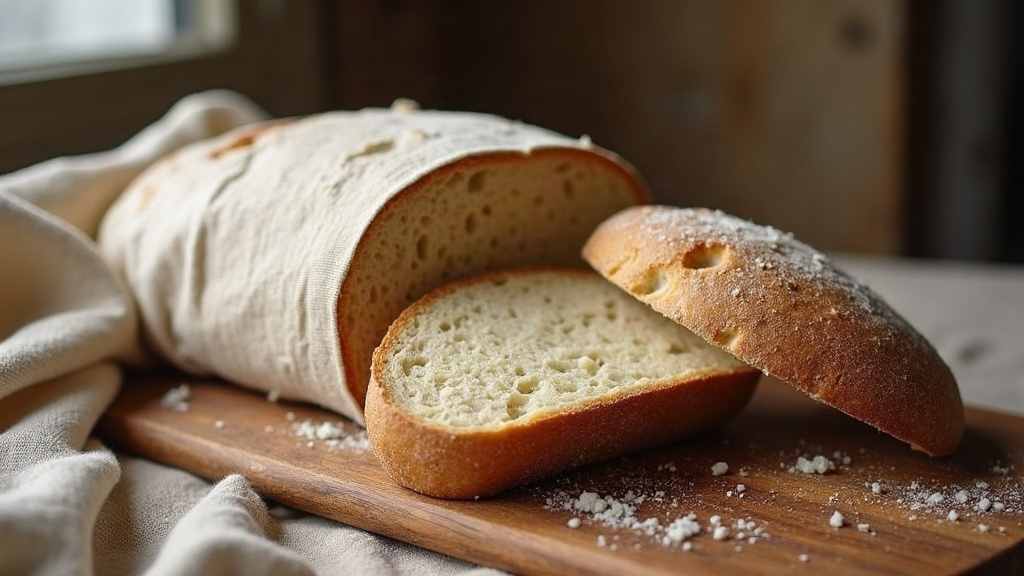
If your homemade sourdough turns rubbery, dry, or just plain sad within a day or two, you haven’t messed up the recipe. You’ve messed up the storage. Sourdough goes stale faster than the stuff from the supermarket because it has no preservatives and a totally different crumb structure. But wrap it right, specifically in a linen-beeswax cloth, and you can stretch that fresh-baked texture out for days. The trick is managing moisture in a way plastic bags and paper sacks just can’t.
Why Sourdough Goes Stale So Quickly
Staling and spoiling are not the same thing. Bread doesn’t need mold or bacteria to turn bad on you. It stales through a process called starch retrogradation, and here’s what’s actually going on under the crust:
- Starch recrystallization: During baking, starch granules soak up water and gelatinize, which is what gives fresh bread that soft, springy bite. As the loaf cools, those starch molecules slowly realign into a tighter, more crystalline structure, pushing moisture out as they go. That’s why a loaf from yesterday already feels firmer, even if it hasn’t actually dried out yet.
- No preservatives: Sandwich bread from the store is often loaded with dough conditioners, emulsifiers, and preservatives built specifically to slow this process down. Sourdough has none of that. Just flour, water, salt, and a levain. No chemical insurance policy.
- Lower fat and sugar content: Enriched doughs like brioche or milk bread stay pillowy longer because fat and sugar get in the way of staling. Lean sourdough barely has any fat, so by comparison it hardens up much quicker.
- High hydration, open crumb: A lot of sourdough loaves are baked with that big, airy, open crumb everyone loves photographing. Problem is, more air pockets mean more surface area, and more surface area means moisture escapes into the room faster.
- Temperature matters: Here’s the counterintuitive part. Refrigeration actually speeds up staling. Cold temperatures accelerate starch retrogradation faster than room temperature does, so the fridge is basically the worst place you could put a loaf (unless you’re freezing it for the long haul).
The Core Storage Problem
Sourdough wants two contradictory things at once: the crust wants to stay dry and crackly, while the crumb wants to hang onto its moisture. Most storage methods only manage to fix one side of that trade-off, never both:
- Plastic bags seal in moisture, which turns the crust soft and chewy, and the trapped condensation can even invite mold.
- Paper bags let the crust breathe fine, but they can’t hold in enough moisture, so the inside dries out within a matter of hours.
- Open countertop storage just dries the whole loaf out, fast, especially if your kitchen runs on the dry side.
Why a Linen Beeswax Wrap Works So Well
A linen beeswax wrap gets around this breathability dilemma, and it comes down to the material itself:
- Linen is a natural, breathable fiber. Unlike plastic, it lets a little air exchange happen, which keeps the crust from going gummy on you.
- Beeswax coating regulates moisture. The wax forms a semi-permeable layer, it slows moisture loss from the crumb without locking it in airtight the way plastic does.
- It mimics traditional bread storage. Bakers have wrapped loaves in cloth for centuries, long before plastic existed, precisely because fabric lets bread breathe while still keeping dry air off it.
How to Use It Properly
- Let the loaf cool completely first, at least 1-2 hours. Wrap a warm loaf and you trap steam inside, and steam means soggy crust.
- Wrap it snugly, cut-side down if you’ve already sliced into it, folding the cloth the same way you’d wrap a parcel in butcher paper.
- Keep it at room temperature, away from sunlight or anything warm like the oven or a stovetop that’s still cooling.
- Best within 3-4 days. After that, your loaf is better off in the freezer than sitting on the counter.
Other Practical Tips for Longer Freshness
- Freeze anything you won’t finish in 3 days. Slice it first, wrap tightly in the beeswax cloth or a freezer bag, then toast straight from frozen whenever you need a slice.
- Revive stale bread with heat and moisture. Mist the crust lightly with water, then pop it in a 350°F (175°C) oven for 8-10 minutes. That re-gelatinizes some of the starch and brings the crispness back, almost like magic.
- Store cut-side down on a wooden board between uses, so you’re exposing as little crumb as possible to the air.
- Skip the fridge altogether unless you’re planning to keep it over a week and intend to toast every single slice anyway.
Conclusion
Sourdough stales fast because it skips the preservatives, runs high on hydration, and bakes up with that open crumb, all of which speed up starch retrogradation, especially if it’s cold or sealed too tight. A linen beeswax wrap hits the sweet spot: enough airflow to keep the crust in good shape, enough moisture retention to protect the crumb. Pair that with room-temperature storage, and freeze whatever you can’t eat in time, and your sourdough can stay close to bakery-fresh for days, not just a few hours.