Why Your Sourdough Deflates the Moment You Score It
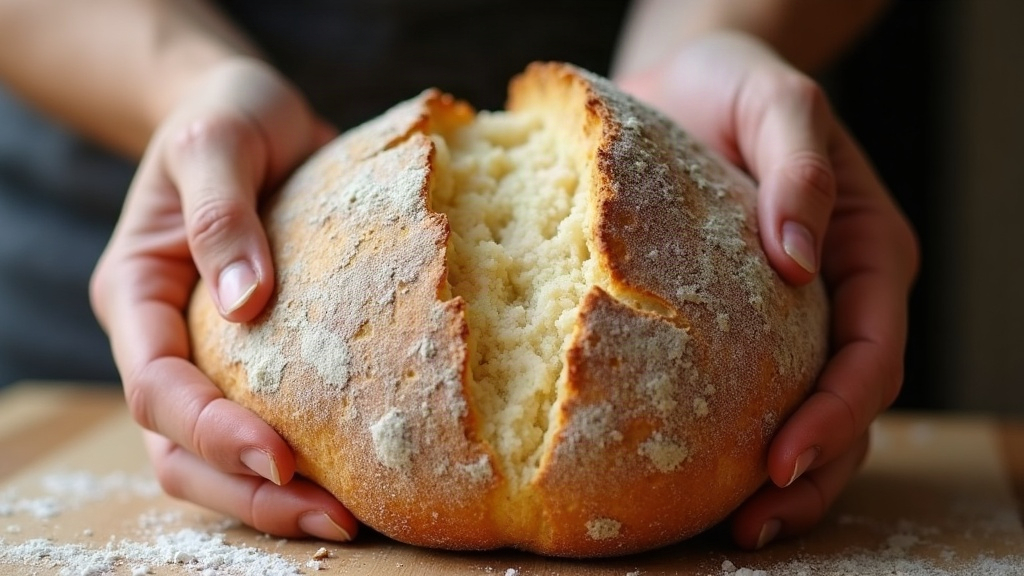
If your sourdough loaf hisses and sinks the moment your blade touches it, you’re not alone. The good news: it’s almost always fixable. That deflation happens because the dough’s gas-holding structure is too weak, or too stretched thin, to survive the pressure release that scoring creates. Below, we’ll walk through the exact causes and how to fix each one, step by step.
Why Scoring Causes Deflation
Scoring is supposed to release controlled steam and open up into an “ear,” not flatten the whole loaf. When one knife cut makes the entire dough ball sag like a punctured balloon, it means the gluten network can no longer hold the carbon dioxide trapped inside. Picture your dough as a web of tiny balloons (the gas bubbles) held up by elastic gluten strands. Overstretch that web, tear it, or let it go too loose, and a single cut is all it takes to pop the whole thing.
Four usual suspects cause this: overproofing, underdeveloped gluten, a dull or dragging blade, and too much hydration without the strength to back it up.
1. Overproofed Dough
This is culprit number one, by far. Overproofed dough has burned through too much of its sugar and structural reserves. The gluten is stretched past its limit, and the bubbles inside have grown oversized and fragile, basically ready to pop at the slightest touch.
Signs of overproofing:
- Dough feels slack, jiggly, almost gassy instead of springy
- The poke test tells the story: press a finger in, and if the indent just sits there with zero spring-back, you’ve gone too far
- Dough nearly doubled (or more) during bulk, then kept expanding through the final proof
- In the banneton, the loaf looks flat and spread out rather than tall and domed
Fix:
- Cut bulk fermentation shorter, especially in a warm kitchen (anything above 75°F/24°C moves fast, faster than most people expect)
- Trust the poke test over the clock, every time
- Try cold retarding in the fridge for 12-14 hours instead of a long room-temp final proof. You’ll get better control and a sturdier structure at bake time
2. Underdeveloped Gluten
If the dough didn’t get enough work during mixing or lamination, the gluten web simply isn’t strong enough to hold gas, even at a totally normal proof level.
Fix:
- Add more stretch-and-folds, say 4 to 6 sets spread across the first 2 hours of bulk
- For high-hydration doughs, the slap-and-fold method builds strength faster than folds alone
- Run the windowpane test: a small piece of dough should stretch thin enough to see light through without ripping
3. Dragging or Dull Blade (Lame Technique)
Sometimes the dough is perfectly fine, and it’s your scoring hand doing the damage. A dull blade, or a razor that drags instead of slicing, compresses and tears the surface rather than cutting it cleanly. That tearing motion is often enough to collapse an otherwise healthy loaf.
Fix:
- Use a fresh double-edged razor on a proper bread lame (don’t reuse a blade for loaf after loaf)
- Score in one quick, confident stroke at a shallow angle, around 30 degrees, never a back-and-forth sawing motion
- Pop the shaped dough in the freezer for 15-20 minutes before scoring. Firmer dough holds its shape far better under the blade
4. Hydration Too High for Your Skill Level or Flour
High-hydration doughs (80% and up) collapse more easily because there’s simply more water diluting the gluten bonds relative to the flour’s strength.
Fix:
- Drop hydration by 5-10% until your shaping and gluten development catch up
- Switch to bread flour with higher protein (12-14%) so it can actually support that extra water
- Shape tight, with real surface tension. That tension matters just as much as the hydration number itself
Quick Diagnostic Checklist
- Dough jiggles and won’t spring back → overproofed, shorten the proof
- Dough tears instead of stretching thin → underdeveloped gluten, add folds
- Loaf still deflates even though timing seemed right → check your blade and scoring technique
- Only happens with very wet doughs → cut hydration or switch to a stronger flour
Conclusion
A loaf that deflates the second you score it is telling you something specific about its structure: it’s over-fermented, under-developed, or got mishandled at the cut. Watch the poke test instead of the clock, build real gluten strength with proper folds, chill the dough before scoring, and pull back hydration if you’re still finding your footing. Tackle these one at a time, and your next bake should hold its shape through the cut, rewarding you with a clean ear and that open, airy crumb you’re after.