Sourdough Bagels with a Stiff Levain: Boiling Time & Chew
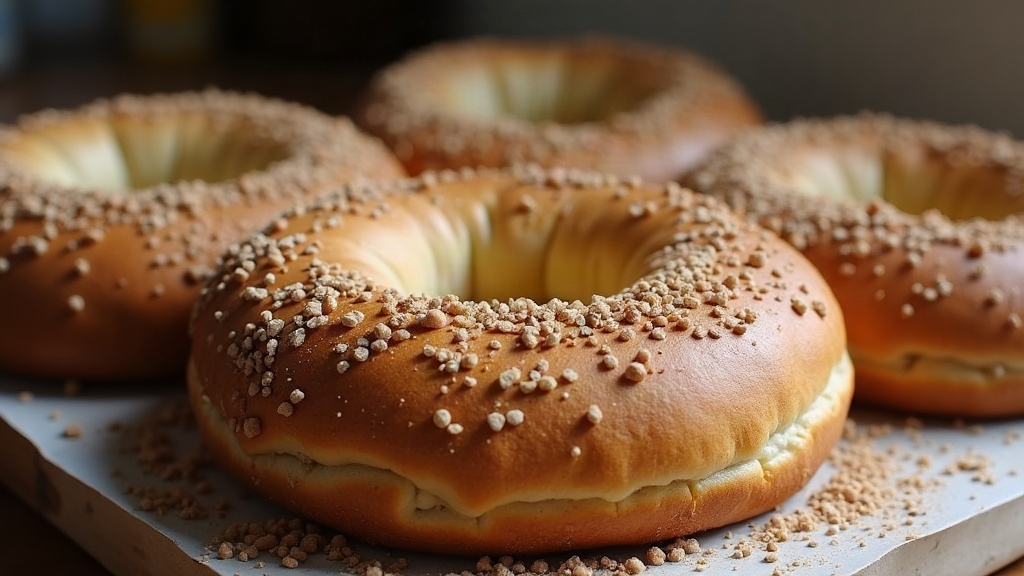
Sourdough Bagels: How a Stiff Levain and Boil Time Control Crust and Chew
Sourdough bagels built on a stiff levain come out denser, chewier, and noticeably more complex in flavor than anything made with commercial yeast. But honestly? The starter is only half the story. What happens in the pot, in those few minutes before baking, decides whether you end up with a glossy, chewy New York-style bagel or a sad bready roll with a hole punched in the middle. Boil it right and you get that signature snap-and-pull. Boil it wrong and the bagel either deflates in the oven or turns gummy inside. Here’s how the two variables, levain stiffness and boiling duration, actually work together to shape crust and crumb.
Why a Stiff Levain Matters
A stiff levain, usually built at 50-60% hydration (compare that to a standard 100% hydration starter), behaves differently from the start. It’s thicker, ferments slower, and builds up less acidity in a given window. For bagels, that changes three things:
- Stronger gluten structure: because a stiff levain doesn’t dump extra water into your mix, you can keep the overall bagel dough at a genuinely low 55-58% hydration. That’s the number that gets you density and chew instead of an airy, open crumb.
- Milder tang with more depth: less lactic acid means the finished bagel tastes rounded and complex rather than sharp or sour. Think bakery-style bagel, not a tangy country loaf.
- Better oven spring without the proofing panic: because fermentation moves slowly and predictably, you get a much wider margin for shaping and overnight retarding without waking up to collapsed dough.
To build one, mix mature starter, flour, and water at roughly a 1:4:2 ratio by weight. You’re after a stiff, kneadable consistency, something you can actually ball up in your hands, not a pourable batter. Leave it at room temperature for 6-8 hours until it’s domed and just starting to dip back down.
The Boiling Step: What It Actually Does
Boiling isn’t a ceremonial step you can skip. It instantly gelatinizes the starch sitting on the dough’s surface, which is exactly what gives a bagel its shiny, chewy skin instead of a soft, bready one. Change the timing and you change the bagel completely:
30 Seconds Per Side (About 1 Minute Total)
- Crust stays thin and delicate
- Chew leans soft, more like a sandwich roll than a true bagel
- Works well if you want something lighter for breakfast
60-90 Seconds Per Side (2-3 Minutes Total)
- This is the sweet spot for a classic, dense, chewy sourdough bagel
- Crust thickens up with a matte shine, the kind that survives toasting without going limp
- Interior stays tight, with that satisfying pull-apart resistance
2+ Minutes Per Side (4+ Minutes Total)
- Crust turns thick, pale, and sometimes a little wrinkled
- Over-boiling seals the surface so tightly that steam gets trapped inside, leaving you with a gummy, underbaked center
- Only worth doing if you’re deliberately going for an extra-dense bagel, maybe one you plan to slice thin and toast into chips
One tweak worth trying: add 1 tablespoon of baking soda per quart of boiling water. It deepens the browning and adds that malty backbone a lot of NYC shops lean on, often alongside a splash of barley malt syrup.
Putting It Together: A Reliable Method
- Build your stiff levain the night before, letting it rise 8-12 hours in a cool room.
- Mix the bagel dough at 55-58% hydration using bread flour, your levain, salt, and a bit of malt syrup or honey.
- Bulk ferment for 2-3 hours at room temp, then shape and move the bagels to the fridge for 12-18 hours. This cold retard isn’t just for scheduling convenience, it’s where a lot of the flavor actually develops.
- Boil straight out of the fridge, 60-90 seconds per side, in water spiked with barley malt or baking soda.
- Top them while still wet (seeds, everything spice, whatever you like) and bake at 475-500°F (245-260°C) for 16-20 minutes, until they’re a deep, even golden brown.
Common Troubleshooting
- Bagels going flat after boiling? That’s almost always an over-proofed dough. Pull back the cold retard time, or run a quick float test before you boil to check where fermentation actually stands.
- Crust too thin and pale for your taste? Push the boil closer to 90 seconds per side and stir some malt syrup into the water.
- Gummy center once baked? Either you boiled too long (cut the time back) or you pulled them from the oven too early. Check for an internal temp of 205-210°F before calling it done.
Final Thoughts
Get the stiff levain and the boil timing working together, and your homemade bagels stop being a decent approximation and start genuinely rivaling your favorite shop’s. Start at 60-90 seconds per side, then nudge the time up or down depending on how thick you want the crust. Let an overnight cold ferment handle the flavor side of things. Once you’ve found your ideal boiling window, going back to a soft, bread-like bagel just won’t feel like an option anymore.