Can You Use Einkorn Flour in a Sourdough Starter? Yes—Here's How
The Short Answer
Yes, einkorn flour works beautifully in a sourdough starter, and honestly, it’s one of the better choices out there. Einkorn is the oldest cultivated wheat on record, and it comes loaded with wild yeast and fermentable sugars. That means it often wakes up faster than your standard all-purpose flour. There’s a catch, though: einkorn drinks water differently and its gluten breaks down quicker, so you’ll need to tweak your hydration and keep a closer eye on feedings than you might with a regular starter.
This guide walks through a real experiment, day by day, plus the fixes for problems that pop up along the way and tips for keeping the starter alive for the long haul.
Why Einkorn Works So Well in a Starter
Einkorn (Triticum monococcum) has never been hybridized the way modern wheat has. That genetic simplicity gives it two real advantages when it comes to fermentation:
- More wild yeast and bacteria: Whole-grain einkorn is packed with the microorganisms that naturally leaven bread.
- Higher natural sugars: Plenty of bakers report bubbles showing up within 24 to 48 hours, well ahead of typical white flour.
- Softer gluten: Nice for handling dough, but it also breaks down fast, so this is something to keep watching closely.
If you want the best results, go with whole-grain einkorn flour, not the sifted, all-purpose version. The bran and germ are where most of that wild yeast actually lives.
The Beginner’s Experiment: Day by Day
Here’s roughly how the first week goes with a 100% hydration starter (equal weights of flour and water).
Day 1: Mixing
- Mix 50 g whole einkorn flour with 50 g filtered water (around 75-80°F / 24-27°C).
- Stir until there’s no dry flour left, cover loosely, and set it somewhere at room temperature (70-75°F / 21-24°C).
Day 2-3: The False Rise
Don’t get excited too soon. Around day 2, the mix will often rise dramatically, and it’s tempting to think you’ve nailed it. Most of that action is leuconostoc bacteria, not actual yeast, a totally normal “false start.” It might smell a little sour, maybe even faintly cheesy. Push through anyway.
Day 4-5: The Slump
This is where things stall. As the pH drops and real yeast colonies start moving in, activity often flatlines. It’s also the point where a lot of beginners give up. You might see a flat starter, or a thin layer of liquid on top (that’s hooch). Stir it in or pour it off, doesn’t matter much either way.
Day 6-7: Stable Rise
By this point, you should be seeing consistent doubling within 6 to 8 hours of a feeding. A healthy einkorn starter has a pleasant sour smell with something fruity and nutty underneath.
Einkorn-Specific Tips That Actually Matter
Hydration: Aim a Little Higher
Einkorn takes on more water than modern flour, though at first it can look almost soupy. Start at 100% hydration (equal parts by weight) and don’t panic-add flour. If it’s turned thick and paste-like by day 3, bump it up to 110% (say, 50 g flour to 55 g water).
Feeding Schedule
- Days 1-3: One feeding every 24 hours.
- Days 4+: Twice a day once it’s active. Discard down to 50 g of starter, then add 50 g flour and 50 g water.
- Discarding matters: Einkorn starter gets hungry fast. Skip the discard and the acid builds up, weakening the gluten structure.
Watch the Clock, Not the Recipe
Einkorn peaks quickly and falls just as fast. If it’s rising and collapsing before your next scheduled feeding, feed it sooner, or move it somewhere a bit cooler (68°F / 20°C) to slow things down.
Common Problems (and Fixes)
- Smells like acetone or nail polish: That’s a starving starter. Feed more often, or try a bigger ratio like 1:2:2 (starter:flour:water).
- No rise after 7 days: Check your water first. Chlorinated tap water can kill off yeast activity. Switch to filtered or bottled.
- Runny or separating fast: Normal for einkorn. Resist adding extra flour, just stir it back in and keep feeding on schedule.
- Can you mix einkorn with bread flour? Absolutely. A 50/50 blend gets you einkorn’s yeast boost along with the stronger gluten of modern flour, a solid combo for a first loaf.
Baking With Your Einkorn Starter
Once your starter reliably doubles in 4 to 6 hours, it’s good to go. Keep in mind einkorn’s gluten is delicate:
- Go easy on the dough: less kneading, shorter bulk fermentation.
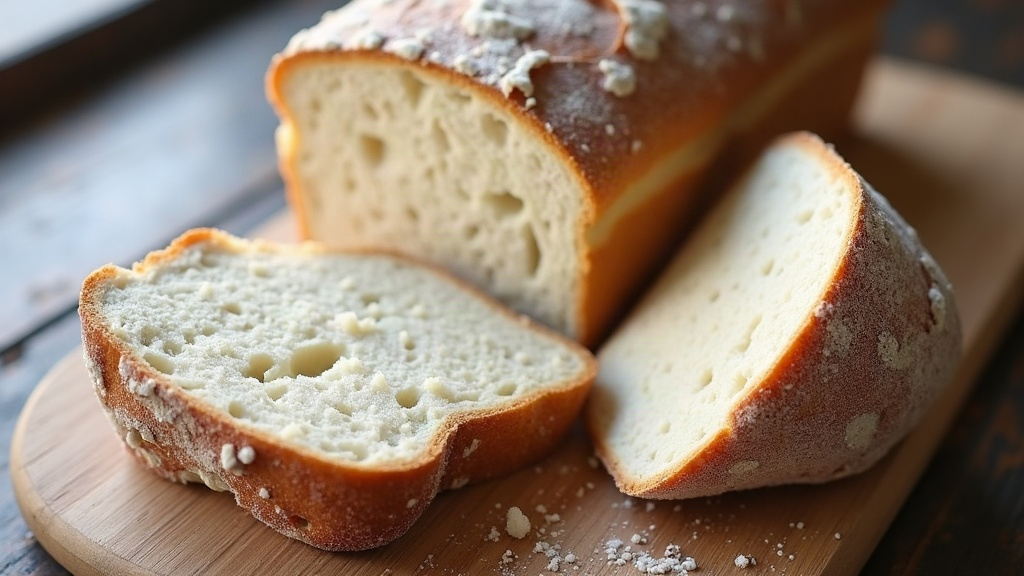
- Expect a denser, more tender crumb compared to white-flour bread. That’s just how einkorn behaves, not a mistake on your part.
- Keep final dough hydration a bit lower (65-70%) to make up for einkorn’s soft structure.
Conclusion
Baking with an einkorn sourdough starter isn’t just doable, it’s genuinely worth the effort. What you end up with is a fast-acting, fragrant, nutrient-dense starter with a nutty flavor you simply won’t find in anything store-bought. The trick is sticking it out through the day-4 slump, nudging hydration a little higher than usual, and staying flexible with feedings. Start with your 50 g, feed it faithfully for a week, and you’ll have a lively einkorn starter ready for your first ancient-grain loaf.